

We republish here an article from Greenwashing Economy's blog. Like this french ecologist website we find clarifications around the ecofascist concept necessary.
How to spot an ecofascist
Updated the 11/12/2024
«The fight against fascism requires a fight against the industrial way of life»
– Sebastián Cortés, Radical Anti-Fascism: On the Industrial Nature of Fascism, 2015
«Ecofascism has the future on its side, and it could just as easily emerge from a totalitarian regime on the left as from one on the right, under the pressure of necessity. Indeed, governments will be increasingly compelled to act to manage resources and space that are becoming increasingly scarce. […] Maintaining the level of oxygen necessary for life can only be ensured by sacrificing that other vital fluid: freedom. […] One fine day, those in power will indeed be forced to practice environmentalism. It will be the very people responsible for the Earth’s ruin who will organize the rescue of what little remains and who, after a time of abundance, will manage scarcity and survival.»
– Bernard Charbonneau, The Green Light: A Self-Critique of the Ecological Movement, 1980
«Eco-technocracy is fundamentally a form of eco-fascism, a destruction of freedoms under the iron heel of industrial technology in the service of the growth-oriented mindset that persists even when growth becomes impossible[1].»
– Serge Latouche, degrowth economist
«The reproduction of the foundations of life can be organized within the framework of an eco-techno-fascism that artificially replaces natural cycles with synthetic niches and seeks to scientifically determine the techniques and pollution thresholds that are ecologically sustainable, that is, the conditions and limits within which the development of the industrial technosphere can continue without compromising the ecosphere’s self-regenerative capacities. This approach does not fundamentally break from industrialism and its hegemony of instrumental reason. It recognizes the need to limit the plundering of natural resources and to replace it with rational, long-term management of air, water, soil, forests, and oceans, which implies policies to limit emissions, promote recycling, and develop techniques that are non-destructive to the natural environment. »
– André Gorz, *Ecologica*, 2007
Given that, according to Serge Latouche, ecofascism is in the process of colonizing the planet, it becomes vitally important for the environmental movement to learn to recognize ecofascist vermin. To establish criteria for identifying them (almost) at a glance, I draw, among other things, on the insights of Sebastián Cortés, Bernard Charbonneau, André Gorz, and Serge Latouche, who have identified a close link between industrialism and fascism.
Some Theoretical and Historical Background
In writing this article, I did not draw on the analysis proposed by essayist Pierre Madelin in *La tentation écofasciste* (2023), which claims to be inspired by Charbonneau and Gorz[2], but which in reality seeks above all to reposition ecofascism on the right. As if Marxism had never been supremacist, racist, ethnocidal, and genocidal[3].
As if anti-immigration sentiment could not be the work of a Marxist regime acting out of necessity. It is worth recalling here that peasants have almost always been viewed by urban elites and the state as “Indians, savages from the interior, who had to be subdued and converted—willingly or by force—to modernity.” In his book Zomia: The Art of Not Being Governed (2009), anthropologist James C. Scott describes this phenomenon as “internal colonialism”—in other words, the state’s desire to culturally homogenize the population under its rule:
«The clash between states with expansionist aims and autonomous populations is by no means unique to Southeast Asia. It can be found in the cultural and administrative process of ‘internal colonialism’ that characterized the formation of most modern Western nation-states; in the imperial projects of the Romans, the Habsburgs, the Ottomans, the Han, and the British; in the subjugation of indigenous peoples in settler colonies, such as in the United States, Canada, South Africa, Australia, and Algeria; and in the relationships between sedentary and urban Arabs and nomadic herders, which have characterized much of the history of the Middle East. Admittedly, the precise form these encounters took is undoubtedly unique in each case. Nevertheless, the ubiquity of the encounter between autonomous populations and those governed by a state—varying descriptions include the raw and the cooked, the wild and the domesticated, the peoples of the hills and forests and the peoples of the valleys and plains, upstream and downstream, the barbarian and the civilized, the backward and the modern, the free and the bound, peoples without a history and peoples with one—provides us with numerous opportunities for triangular comparison.»
That is why the Bolsheviks, obsessed with catching up industrially, declared war on the peasant masses—who were an obstacle to the country’s industrialization—as soon as they seized power. Tens of thousands of peasants were shot, and 7.5 million Russians died of starvation, cold, and epidemics between 1918 and 1920, under Lenin’s rule. As for Stalin, between 1930 and 1940 he had 20 million peasants deported to the cities. Colonization, ethnocides, genocidal massacres, deportations—if all this doesn’t resemble fascism, I don’t know what does. Native American activist Russell Means would agree with this analysis. In a 1980 speech delivered before tens of thousands of people, he stated that he saw “Marxists still imposing this same industrial order on tribal peoples” all over the globe.
«Revolutionary Marxism, like any form of industrial society, seeks to ‘rationalize’ people according to the demands of industry, for the sake of maximum industry and maximum production. It is a materialist doctrine that holds a deep contempt for the spiritual tradition of Native Americans, for our cultures and our ways of life. Marx himself labeled us ‘pre-capitalist’ and ‘primitive.’ “Pre-capitalist” simply means that, in his view, we would eventually discover capitalism and become capitalists; we are therefore economically backward, according to Marxism. The only way for Native Americans to take part in a Marxist revolution would be for them to join the industrial system, to become factory workers, or “proletarians,” as Marx calls them. Marx was very clear that his revolution could only take place through the proletariat’s struggle against the ruling class, and that the existence of a massive industrial system was a prerequisite for the success of a Marxist society.»
The left is pulling the wool over the world’s eyes by pitting Marxism against fascism; they are one and the same industrialist movement, one and the same enterprise of domination, dispossession, and destruction. That is why the defenders of nature and freedom have made it their mission to eradicate this cancer once and for all.
Idealists and other philosophers of Madelin’s caliber fail to grasp this fact, which has nevertheless been demonstrated time and again by the history of state-run societies: it is the inertia of the bureaucracy and external constraints that drive politics, rather than ideas. Contrary to what leftist propaganda spouts, fascism is not exclusively a right-wing phenomenon, much less an anomaly. It is a deep-seated tendency within industrial civilization[4]. Like Marxism, it serves to restart the machine during systemic crises that regularly disrupt the stability of industrial civilization. Ecofascism serves a similar purpose: it involves doing everything possible, both organizationally and technically, to adapt the industrial system to new energy and material constraints. Regardless of the human and ecological cost of these measures, absolutely everything must be done to keep the industrial system functioning for as long as possible.
Ecofascism thus represents a mutation of original fascism. It seeks to adapt the system to the environmental constraints of the times, as deep and repeated crises multiply. Whether on the left or the right—and regardless of their empty campaign promises—eco-fascists will pursue policies of coercive control over resources, territories, and populations. Without further ado, here is our list of criteria for distinguishing an eco-fascist scoundrel from a genuine environmentalist.
The ecofascist dreams of an all-powerful state
Fascism could not exist without these three elements: the state, industry, and modern infrastructure to control the territory—for example, the railroad, which enabled the Nazis to exterminate groups deemed undesirable with unprecedented efficiency. To label as “eco-fascists” xenophobes and racists who buy farms, advocate a simple lifestyle, and call for the creation of “identity zones to be defended”—as Reporterre does—is to completely misunderstand fascism[5]. These people have in fact abandoned the idea of seizing power and are instead part of a secessionist movement.
Whether they are on the right or the left, ecofascists offer a very similar analysis of social and ecological problems. The root of the crisis is said to stem from the state’s loss of control over its population, its borders, and a growing number of strategic economic sectors. The state has reportedly been stripped of its authority over industrial policy, border management, and public services. Over the past few decades, successive neoliberal governments have pursued a policy of granting ever-greater powers to large foreign corporations and supranational institutions (the European Central Bank, the European Commission, the IMF, etc.[6]).
To remedy the situation, ecofascists want the return of a strong state, a strategic state—in other words, an interventionist and planning-oriented state. Some left-wing ecofascists go so far as to dream of AI-powered global governance, based on the Internet, data centers, and satellite networks[7]. This would entail banning the sale of non-essential goods and rationing energy and basic necessities. It would also entail implementing massive social engineering programs to compel every individual in society to adopt the same values, behaviors, and attitudes, so as to herd the human cattle in the direction desired by the central authority. The ecofascist is fundamentally a frightened calf ready to submit to any despot who promises him salvation. He is ready to abandon all dignity and all humanity to safeguard his degenerate industrial culture, which he (wrongly) considers the pinnacle of evolution.

—What do you mean by ‘abolition’?—We stop.”
Thomas Guénolé, a political scientist and anti-globalization activist, and former member of La France insoumise, is a prime example of a left-wing eco-fascist who dreams of authoritatively imposing a uniform diet on the entire global population—all, of course, under the guise of decarbonizing the techno-industrial system. Invoking “progress” to create hell on Earth—we’re starting to hear this leftist tune all too often.
About Thomas Guénolé
In 2016, Thomas Guénolé published a book titled *La mondialisation malheureuse* (The Unfortunate Globalization), in which he recounts the usual nonsense of the “religion of Progress”: with good governments—so-called “alternative systems”—another world would be possible—one that is more just, more egalitarian, and more democratic. Riding the wave of the myth of technological neutrality, the political scientist asserts that thanks to 3D printing, it will soon be possible to relocalize production and make the transition to “happy” globalization—or even to abolish “industrial manual labor during the 21st century.” All it takes is to believe in it, to hope, and to pray every day. For Guénolé, “an ‘alternative system’ is any initiative, any project, any political program whose purpose is the well-being of the greatest number of people, which is compatible with or contributes to the preservation of the global ecosystem, and which weakens oligarchy or refrains from reinforcing it.” That’s funny, because destroying the global ecosystem and reinforcing oligarchy is precisely what techno-industrial progress has been leading to for the past 200 years. Thomas Guénolé is also someone who believes that halting the development of AI is “obscurantist.” Yet this is a technology that is massively destroying jobs and threatening the future of the human race, according to leading experts (such as Geoffrey Hinton). Guénolé also thinks that electric cars are “very virtuous” and believes that industrialization has primarily brought “progress and comfort.” Here you can get a sense of the caliber of this genuine left-wing ecofascist.
An ecofascist can be from the left or the right
One of the many deceptions of the modern left is to confine eco-fascism to the far right. As usual, the left claims every virtue in order to seize power. But once in power, fine words give way to pragmatism in order to manage constraints (social unrest, global interstate competition, energy supply, etc.). Far from being fooled by the historical revisionism of the leftist intelligentsia, we have not forgotten the terrorism of the Bolshevik state—a policy deemed essential to neutralize a vigorous political opposition, modernize the USSR’s productive apparatus, and catch up with the United States. Nor have we forgotten the greatest famine in human history (36 million deaths), caused by the forced industrialization policies of Mao and the Chinese Communist Party.
If a left-wing party comes to power, it will therefore be material constraints that dictate the state’s policies. To put it another way, it is short-term constraints—which determine whether the state survives or not—that determine the policies a government will pursue[8]. That is why, when members of the left-wing intelligentsia claim they can revive public services and welcome millions of climate migrants, they lie as easily as they breathe. They know full well that it would be suicidal for a state to implement such policies, especially given the decline in economic growth that has been observed for several decades now.
Even if the left denies this in its propaganda, should it come to power, it will be forced to implement ecofascist policies, repel increasingly massive waves of migration, strengthen police control over the territory, ration resources for the population, and continue to plunder the Global South. There is simply no other way to prevent the collapse of the industrial order.
About Pentti Linkola
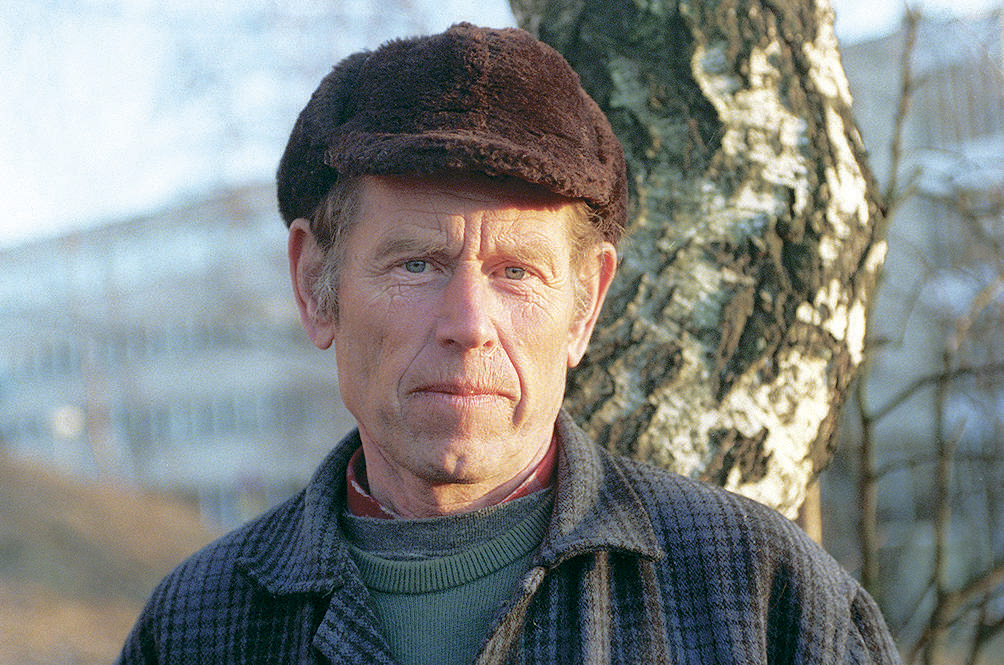
Under the guise of protecting nature, Linkola advocates such “delights” as the establishment of a dictatorship led by experts in ecological sciences, birth control measures extending as far as forced sterilizations, a total halt to immigration (or even its reversal), the extermination of invasive animal species, and the euthanasia of “deficient” individuals. In his view, the perfect society would consist of depriving the majority of the population of modern technology, which would be reserved exclusively for supposedly “enlightened” leaders—notably for their own protection. Obviously, such a project requires infrastructure and high technology, which implies preserving—and further developing—the industrial system that is destroying the biosphere. Like left-wing ecofascists, right-wing ecofascists exploit environmentalism to preserve the system. In contrast, the only environmentalist project worthy of the name should focus exclusively on dismantling the industrial system that is causing this carnage. Without this system, it would be impossible for either the left or the right to seize state power and impose their delusional policies on millions of people.
An ecofascist is a member of or a supporter of the technocratic class
There are many ecofascists among scientists and engineers, among the “knowledge capitalists” and the “intellectual bourgeoisie.” Ecofascism recruits primarily from among frustrated engineers and executives—for example, graduates of the french École Polytechnique who have failed to build their own industrial empires. They blame their personal failure on the system’s shortcomings and believe that a new technocracy—one more enlightened than the current one—must take control. Environmentalism is merely a pretext for implementing an ultra-authoritarian industrialization policy, just as Marxism and National Socialism were in their time.
It is worth recalling, moreover, that for decades—beginning in the 19th century—the German technocracy paved the way for the Nazis’ rise to power by neutralizing the strong anti-industrial sentiment among the population. Indeed, these ideas threatened the hegemony of the technocratic class. Russian technocracy also brought the Bolsheviks to power. In Stalinist USSR, nearly 80% of the members of the Political Bureau of the Soviet Communist Party belonged to the technical intelligentsia. For over a century, the technocratic class has infiltrated the left and the right—and today the environmental movement—to ensure its own reproduction; a reproduction that depends on the preservation and expansion of an industrial system. Since this system is the instrument from which technocracy derives its power and privileges, preventing its collapse is now the top priority for ecofascists.
In the industrial sphere, it is the scientific, technical, and cultural elite that enjoys the greatest legitimacy among the masses. By presenting itself as apolitical or “neutral”—much like the technology it designs and produces—technocracy is able to deceive the public. This elite also possesses expertise that grants it a certain prestige among the followers of “the new universal Church[9].” This is why there are many people—especially among the upper middle classes—who support eco-technocracy and who, therefore, should be classified as eco-fascists.
Read our feature on technocracy.
Ecofascists are always pro-industry
A very important point to keep in mind when distinguishing an ecofascist from a true environmentalist is the concept of power. The true environmentalist has understood that great power is achieved through technological progress, an endeavor that always goes hand in hand with the destruction of nature and freedom. Consequently, the true environmentalist is one who seeks by any means to destroy power[10].
In contrast, the ecofascist seeks power. Today, the colossal power of our civilization stems from a system of infrastructure, factories, mines, power plants, and machines. While the ecofascist may sometimes display a superficial distrust of certain technological innovations, he retains his faith. Science and engineering will solve all problems. The ecofascist has a deeply irrational tendency to view industry as a good thing, even though his flesh and blood are saturated with toxic industrial substances. In their machine-shaped imagination, ecofascists also make the gross mistake of confusing power with control. Their indoctrination prevents them from seeing that it is the advancement of power—and not poor management of human affairs—that is at the root of the growing global chaos.
As we mentioned earlier, ecofascists are convinced that the state has lost control of the course of events—a fact they attribute primarily to a lack of power. It is therefore necessary to (re)provide the state with the legal, administrative, and above all technical means to prohibit, monitor, sanction, and crack down in all areas—whether economic, cultural, social, or even in private life.
Achieving this goal requires a partial restoration of the state’s autonomy[11], and thus an ultra-proactive reindustrialization policy. Indeed, new technologies must be developed to produce “clean” energy, detect greenhouse gas emissions, track individuals’ carbon footprints, and improve energy efficiency. New carbon-free infrastructure must also be built to ensure that the flow of materials and information is not disrupted by potential oil shortages. Data centers, drones, and AI are needed to control the system and the population. For the ecofascist, ecology thus serves as a pretext for industrialization, since the state derives its power from its infrastructure and productive capacity. This is why, during the last presidential elections, ecofascists on both the right and the left—without exception—called for the reindustrialization of France in the name of ecology.
Ecofascists prioritize the system over people
The ecofascist identifies more with a machine than with a living being that evolves within a biosphere. The most fanatical among them go so far as to equate the biosphere and humanity with a machine that drains resources and pollutes. Other machine fanatics prefer liquid food, considering chewing and human fellowship around a meal to be primitive and inefficient.
The ecofascist has adopted the motto of Frederick Taylor, an engineer and one of the great theorists of the scientific organization of labor:
« In the past, man was the most important; in the future, the system must take precedence[12].»
Ecofascists engage in a very particular kind of secession: they abandon their humanity to serve the megamachine. The funniest part of this story is that ecofascists consider themselves rational beings. To them, it is rational to keep a system functioning that is destroying them and their species. The ecofascist is completely impervious to the astronomical amount of scientific data showing that the Industrial Revolution is the worst thing that has happened to the human species in its 300,000 years of existence.
The ecofascist hates nature and freedom
This characteristic stems from the previous one. Ecofascists are true biophobes. While in their rhetoric they claim to be working to defend nature, in reality this is not the case. Like any good technocrat, they hate the unpredictability of nature, which stems from its complexity and autonomy. With the Industrial Revolution, technocracy declared war on nature. By developing ever more powerful technical means and deploying infrastructure that now forms an artificial ecosystem—a “technotope”—the scientific and technical elite seeks to subjugate nature to its will to power. It is by stripping living beings of their autonomy—starting with humans—that technocracy intends to take control of evolution.
Since the ecofascist attributes this loss of control to human nature, it must be addressed by every possible technical means: surveillance, control, repression, and—when biotechnology makes it possible—genome editing, eugenics, artificial reproduction, neural implants, etc. The imagination of these Nazis in white coats knows no bounds when it comes to subjecting the human primate to their delusions of power. Further proof of their madness: by destroying human autonomy, ecofascists also destroy their own freedom. And they do so willingly, just like those hordes of Germans who welcomed with open arms one of the worst totalitarian regimes of the 20th century. As we saw above, this is because the ecofascist identifies with the machine—with the system of machines—and not with a biological human being whose survival depends on a functional biosphere (oxygen levels in the air, potable and liquid water, soil fertility, atmospheric pressure, etc.).
The ecofascist is obsessed with moral purity
Ecofascists are a particular kind of religious fanatics. In order to atone for their sins and gain entry into a carbon-free paradise, they embark on an obsessive quest for moral purity, measuring their progress through their carbon footprint. Their stated goal? To reduce the average French person’s carbon footprint from 10 to 2 metric tons of CO2 per year in order to—supposedly—achieve carbon neutrality and limit global warming. Yet anyone with even a modicum of knowledge knows that decarbonization is just greenwashing. Decarbonizing would mean bringing about the collapse of industrial civilization, whose energy consumption relies on coal, oil, and gas for more than 80 percent of its needs. Don’t ask an ecofascist to be rational.
Ecofascists are also suckers who work for free to optimize the functioning of the industrial system. They sort their trash, deposit their compost in the bins set up by their eco-friendly city government, buy in bulk, and take the time to analyze absolutely every label on the products they consume. Here again, specific technologies (smartphone apps in particular) help them measure their level of purity. They refuse to fly or drive a gas-powered car—it’s a “sin.” Nothing makes them happier than adding constraints to their lives and sacrificing what little free time they have to rack up a few extra purity points.
Ecofascists do not merely seek to save their souls; above all, they desire to purify society. That is why they campaign to ban all practices they deems impure, such as bullfighting, off-road vehicles, livestock farming, meat consumption, and hunting. Ecofascists share this obsession with purity with Adolf Hitler and Heinrich Himmler—proof that their grandstanding does not make them better men, much less superior beings.
As Theodore Kaczynski brilliantly analyzed, the real motivation of the ecofascist—a particular type of leftist in the Kaczynski sense of the term—is not to achieve his goals, but to experience a sense of power by imposing his solutions on society. This obsession with purity, combined with extremely powerful and invasive technological means, inevitably leads to totalitarianism.
«Leftism is a totalitarian force. Whenever it is in a position of power, it tends to invade every corner of private life and reshape all thought in its own image. Because of its quasi-religious nature, anything that opposes its beliefs embodies sin. If it is totalitarian, it is above all due to the leftist’s appetite for power, which he seeks to satisfy by identifying with a social movement—allowing him to exercise his power by contributing to the movement’s success. But no matter how successful the movement may be, the leftist is never satisfied, as his activism is merely a substitute activity. His real motivation is not to achieve the stated goals of leftism, but to experience the sense of power that comes from accomplishing a goal.
[…]
Suppose you asked leftists to make a list of everything that’s wrong with society, and suppose you could implement all the social changes they demand. It’s a safe bet that it wouldn’t be long before the majority of leftists found something new to complain about—some new social “evil” that needs to be corrected. Let’s repeat: the leftist is motivated less by social malaise than by the need to satisfy his or her desire for power by imposing their solutions on society[13].»
The ecofascist couldn’t care less about the climate, nature, or humanity; he is a psychopath disconnected from reality who seeks every pretext and every means to «dictate the lives of others» in order to satisfy his boundless thirst for power. Once he has achieved his goals, he will quickly invent new societal dysfunctions and take it upon himself as a divine mission to correct them.
Once a total ban on the consumption of sentient mammals is achieved, new eco-fascists will begin campaigning to ban the consumption of plants as well, since they too possess a form of intelligence and sentience[14]. This is a windfall for the agro-industrial complex, which is investing heavily in biotechnology to completely artificialize food production and eliminate small farmers. Other anthropophobes consider pregnancy to be “barbaric,” which is why they are already campaigning for the development of the artificial womb. It is this same bunch of lunatics who will later campaign for the state to legislate over your children’s genetic code.
As we have seen, the ecofascist is a zealous servant of the techno-industrial system. Through his frenzied activism, he fraudulently claims to be serving the cause of ecology and emancipation. But in reality, his goal is the pursuit of power and the adaptation of industrial society to technological changes and planetary limits. His holy war is to prevent the collapse of industrial civilization. Ecofascism will destroy what little nature and freedom we still enjoy today, which is why it must be fought alongside the industrial system from which it draws its power.