
Ecology, Jeff Bezos Style
One of the greatest ironies of the industrial age is watching those who have done the most to destroy the planet promise to save it through the further development of their technologies.
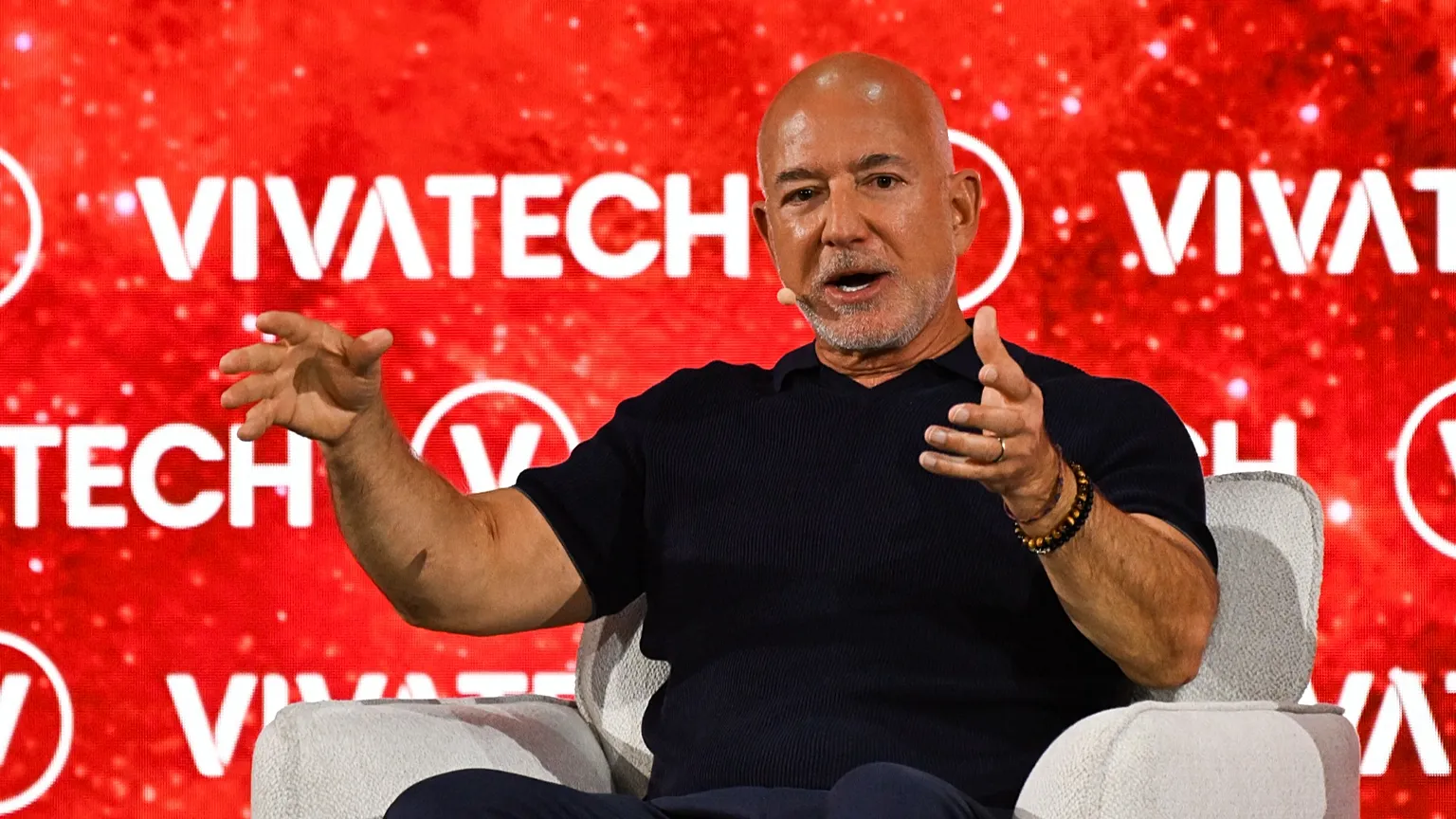
Jeff Bezos, the founder of Amazon, made quite an impression at the VivaTech festival taking place this week in Paris. As the guest of honor at this major showcase for disruptive innovation and venture capital, the billionaire was able to present his grandiose plans to enthusiastic applause, without encountering the slightest opposition.
Yet what this immensely powerful man is funding is a dangerous utopia built on fundamentally flawed assumptions.
His proposal is nothing less than relocating the world's most polluting industries into space and exploiting the Moon's and asteroids' natural resources. The goal? To "return our garden planet to its pre-industrial state."
Perhaps this should come as no surprise. After the exploitation of the oceans and even subatomic particles, the new frontier for these tech pioneers is outer space.
Jeff Bezos's grand visions might seem laughable were he not one of the richest and most influential people on Earth. Behind these spectacular declarations, real industrial infrastructures are already taking shape.
After all, rockets and space excavators do not grow on trees. Bringing such projects to life would require an enormous increase in the exploitation of Earth's own resources.
Moreover, if manufactured goods continue to flood the planet, it matters little whether the raw materials come from space: pollution from transportation and waste would continue to scar Bezos's imagined earthly paradise.
But beyond these technical and ecological limitations, it is the underlying premise itself that is deeply problematic. Jeff Bezos argues that environmental degradation is the only real downside of the techno-industrial development of the past few centuries.
Yet this techno-progressive narrative does not withstand historical scrutiny.
Techno-industrial development is inseparable from the rise of an all-encompassing society in which every aspect of life is integrated into a system of global production. It has gone hand in hand with a dramatic erosion of freedom through mass surveillance and the monitoring of our every move. It has enabled some states to acquire weapons of mass destruction, and today it allows people like Jeff Bezos and Elon Musk to wield more power than perhaps any individual has ever possessed.
And can we truly speak of a decline in poverty when entire populations have become completely dependent on industrial products, dispossessed of access to land, and stripped of the ability to provide for their own subsistence?
All that techno-enthusiasts like Jeff Bezos are really offering is the deployment of machines of large-scale destruction into space in order to preserve the industrial order at all costs and intensify its predatory logic.
To separate ecological concerns from the broader systems of exploitation and domination embedded in the technological order is both absurd and irresponsible. But it is perfectly consistent with the worldview of a tech giant like Jeff Bezos, for whom environmental destruction is merely another technical problem to solve—and another business opportunity to exploit.
At this point, it is becoming increasingly clear that technological development will shape humanity's destiny in the decades ahead. Do we really want our survival on an overheated planet to depend on Jeff Bezos's space-mined resources, safeguarded only through the goodwill of tech entrepreneurs? Or do we want to reclaim our collective future, recognize our rootedness in the Earth, and organize together to defend it?
Against technology.
For life.