
"We will argue that if the development of the technologicalworld-system is allowed to proceed to its logical conclusion, then inall probability the Earth will be left a dead planet-a planet on which nothing will remain alive except, maybe, some of the simplest organisms-certain bacteria, algae, etc.-that are capable of surviving under extreme conditions."
Theodore Kaczynski,Anti-Tech Revolution: Why and How? (2016)
1. UNDER OUR FEET, THE COVETED DEPTHS
1.1. THE INDUSTRIAL EXTRACTION OF THE DEPTHS
The seabed is already ravaged by industrial fishing. Microplastics are found in the deepest waters and industrial waste in the most remote places in the oceans.
Today, industrialists want to extract mineral resources from the ocean depths. Indeed, it takes manganese, nickel, cobalt, zinc, gold,silver, copper and rare earths to fuel the race for technological development that ravages the land and promises us a totalitarian world of surveillance, control and wars.
The Clarion-Clipperton zone, an area of 6 million km² in the North Pacific, is their primary focus. It alone would concentrate more than6 billion tonnes of polymetallic nodules, meaning quantities of cobalt and nickel greater than all known terrestrial reserves [1].
1.2. THE MYTH OF THE "VIRGIN" RESOURCE TO BE EXPLOITED
For decades, the technical inaccessibility of the great ocean depths has been a bulwark for their exploitation. However, this protection has never been due to deliberate ecological wisdom, but to a simple technological limit, which is far from being equivalent. Since technical progress has made extraction possible, the industry has mobilized to make it inevitable. Every technical innovation generates its own needs. Once it becomes possible to extract the abyss, it becomes necessary to do so, in the name of growth, competitivenessand power. As philosopher and technocritical sociologist Jacques Ellul wrote, “whatever can be done therfore should be done." »
With technological progress, the seabed is moving from a space that the Montego Bay Convention (1982) had legally defined as "the common heritage of humanity", to a giant stock of undifferentiated raw materials.
2. ABYSSAL MEGAMACHINE
2.1. A TITANIC INDUSTRIAL DEVICE
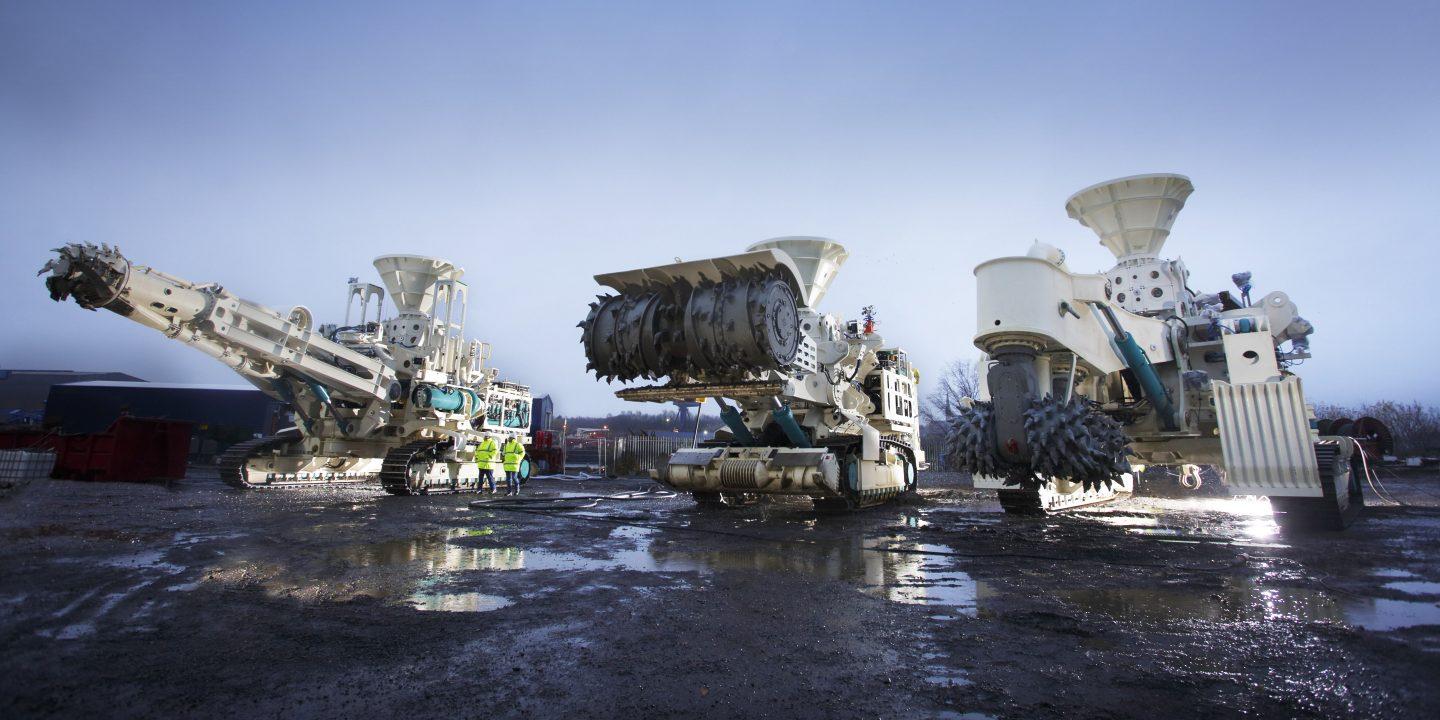
Deep sea mining is based on robotic collectors (ROV) of several tens of tons, like the Patania II robot developed by Global Sea Mineral Resources (GSR), capable of scraping the first ten centimeters of the seafloor in order to vacuum polymetallic nodules. These machines would be connected to riser systems [2] intended to pump the extracted materials over several kilometers tofactory ships over 200 meters long, where sorting and preliminary processing operations would be carried out. The envisaged flow rates would reach between 2,000 and 6,000 tons of ore per day and peroperating site [3].
Concretely,these industrial infrastructures function as an integrated extractivechain: the machines scrape the abyssal seabeds, raise the nodules tothe surface, and then discharge the residual sediments and water fromthe mining process into the ocean. The materiality of this devicelargely contradicts the representations of a "clean" or notintrusive extraction often mobilized in industrial discourses (Avideo to illustrate: https://www.youtube.com/watch?v=Lwq1j3nOODA).
Thelatter only highlight technical efficiency and economicprofitability. And yet, as with AI or any other technologicalinnovation, feasibility studies are based on dubious and fallaciousassumptions that have no other objective than to artificially buildthe economic viability of projects[4]3.We overestimate yields, we minimize ecological costs, and we can thendeclare right in our boots that we are contributing to the progressof humanity by ravaging entire ecosystems.
2.2. IRREVERSIBLE DESTRUCTION OF ABYSSAL ECOSYSTEMS
Is it even necessary to mention the disastrous ecologicalconsequences of deep sea mining?
Benthicorganisms (relative to the bottom of the water) with low mobilitywould be immediately destroyed by the passage of mining collectors.Habitats formed over extremely long geological time periods(polymetallic nodules grow at a rate of a few millimeters per millionyears) would be razed in seconds. Added to this is the risk ofextinction of endemic species still unknown, abyssal ecosystemsremaining largely unexplored. Sedimentary plumes generated byextraction are another major source of ecological disturbance.Experiments conducted as part of the IOM BIE and Station M projectssince the 1970s show that these particle clouds can spread overseveral hundred kilometers and persist for several decades. Thesephenomena lead to the asphyxiation of filter-feeding organisms anddisrupt food chains well beyond directly exploited areas. Noise andlight pollution from machines will affect the communication andnavigation abilities of certain cetacean species in theseenvironments naturally characterized by near-absolute darkness andsilence.
Therisks also concern global climate regulation. The oceans absorb about30% of greenhouse gas emissions as well as 93% of the excess heatproduced by industrial activities. Deep-sea mining could disruptthese regulatory functions by promoting the recirculation ofcarbon stored for millennia in abyssal sediments and by destabilizingthe biological carbon pump. Finally, several studies highlight thepotential consequences on global food security: disturbances ofmarine ecosystems would threaten fish stocks on which more than abillion people depend, especially Pacific island communities, inFiji, Kiribati, Vanuatu and Tonga.
2.3. THE PARADOX OF INVERTED IGNORANCE
It is much easier to destroy places and living beings unknown to the"general public".
Whileonly a tiny portion of the abyssal plains of the Clarion-ClippertonZone has been studied (about 30 km² over a total area of around 6million km²), scientific researches have already identified morethan a thousand unknown species [5]1.Despite this extremely limited knowledge of the targeted ecosystems,manufacturers in the sector nevertheless claim to be able to"accurately manage" the impacts of large-scaleexploitation.
This situation can be interpreted as a form of "inverted ignorance":the higher the uncertainty, the more confident manufacturers canpromise the technical mastery of their projects. In industrialsociety, innovation usually precedes the comprehensive assessment ofits social and ecological consequences. In other words, technicalcapabilities are developed even before the implications of their usehave been fully understood. Justification, regulation andcompensation mechanisms are developed after the fact.
One might think of all the carcinogenic substances contained in our environment and our everyday objects, one might think of thepesticides that have contaminated the whole earth, of the asbestosthat has given rise to decontamination plans (to be then simplyexported to other countries with more flexible legislation). The listwould be endless – all industrial productions, since they havehelped to dry up the earth, poison our environment and derail ourhealth – are concerned.
3. THE "ENERGY TRANSITION": AN ILLUSION TO PERPETUATE THE SYSTEM
But even the worst atrocities can be justified by the finest speeches. Deep sea mining adds to the techno-scientific elite's long list of false good ideas for responding to the climate crisis. Their “energy transition” appears here for what it is: a leap forward. The objective is not to transform the material foundations of the economic system, but to maintain the continuity of the techno-industrial model by shifting its ecological costs to new extractive spaces and new infrastructures.
In 2021, fossil fuels still accounted for about 82% of global primary energy consumption. Many core industrial sectors, such as steel, cement, plastics and mining itself, remain structurally dependent on hydrocarbons. From this perspective, the idea of a complete decarbonization of the global economic system combined with maintaining the same levels of material production and energy consumption sounds like a big joke. So-called “green” technologies do not simply replace fossil infrastructure: they are most often added to it, increasing the need for materials, energy and extractive infrastructure.
It works more as a decoy to temporarily preserve the technological system rather than resolve its fundamental contradictions.
3.1. THREE FALLACIOUS ASSUMPTIONS
1. The increase in demand for strategic metals represents a material inevitability.
Strategic metal needs are presented as a fatality, a non-negotiable need, a necessity. However, this demand depends on very specific political and industrial orientations. The maintenance of motorized individual mobility as the dominant standard, now simply electrified, the production of particularly heavy electric SUVs requiring high-capacity batteries or the continuous proliferation of rapidly obsolescent electronic objects all contribute to the increase in lithium, cobalt or nickel requirements.
Added to this are the deployment of 5G, the expansion of data centers and the development of "smart cities", which further intensify the material dependence on contemporary digital infrastructures. And of course, the arms industry, necessary for the monopolization of its resources since the great powers are increasingly vying for deposits, itself requires technological advances greedy for rare earths... A vicious circle for humanity and the planet, a virtuous circle for the merchants of death and the techno-scientific elite under their thumb.
2. It would be possible to replace fossil fuels while maintaining aconstant level of global energy consumption.
So-called "renewable" energies does not fall from the sky. A wind turbine requires large quantities of steel and concrete, the production of which remains highly carbon-based, as well as rare metals extracted under destructive conditions. It also presupposes continental electricity networks capable of compensating for the intermittency of production, as well as a periodic renewal of infrastructure every twenty to twenty-five years approximately. As "Le Monde Diplomatique" newspaper points out, contemporary digital technology itself remains largely dependent on coal and hydrocarbons, even though it is one of the main drivers of the growing demand for critical metals [6].
3. Technosolutionism
The third assumption is based on blind confidence in the ability oftechnological innovations to resolve the ecological contradictions ofthe productivist system. For example, LFP (lithium-iron-phosphate) orsodium-ion batteries are frequently presented as solutions to reducedependence on cobalt and nickel. However, even if these innovationspartially change supply chains, they do not call into question thegeneral dynamics of extractive expansion. Each new technologyinvolves new infrastructure, new hardware needs and new energydependencies. The technological system is not moving towardsimplification, but rather toward increasing complexity that requiresmore resources, more energy, and greater logistical integration.
3.2. GERARD BARRON AND THE FALSE DILEMMA
"We have a choice: mine the ocean floor or strip-mine the Amazon." This statement by Gerard Barron, CEO of The Metals Company (formerly DeepGreen Metals) perfectly illustrates the rhetoric of green capitalism. This formulation constructs a false dilemma: by presenting as inevitable the consumption of materials and energy, the energy transition supporters artificially reduce the debate to a choice between two equally destructive forms of extractivism. They lock our future[7]1 by enclosing it in a technosolutionist framework: the ecological contradictions of the industrial system would be resolved not by a profound transformation of social relations and economic structures, but by technical innovation and the opening of new extractive spaces.
4. INSTITUTIONAL ARCHITECTURE OF PREDATION
4.1. THE INTERNATIONAL SEABED AUTHORITY AND THE PRIVATIZATION OF“COMMON HERITAGE”
The International Seabed Authority (ISA), established by the United Nations Convention on the Law of the Sea, is officially responsible for administering the resources of the deep seabed as the “common heritage of mankind”. This legal principle is based on the idea that spaces beyond national jurisdictions should not be appropriated by particular interests but managed collectively for global public interest.
In practice, the concrete functioning of the institution is the subject of increasing criticism. To this day, 31 exploration licenses have already been granted to industrial consortia and multinationals, covering approximately 1,5 million square kilometers, almost four times the size of Germany. Mining states and extractivist industries structurally influence the decision-making processes of the ISA. Despite years of negotiations, the regulatory framework to govern the commercial exploitation of deep seabed remains unfinished.
A technocratic aristocracy, as well as an entire institutional structure that claims to manage the international common good, are in practice closely articulated to the economic interests of mining multinationals and industrialized states.
Tensions have escalated around the “two-year rule”, a legal mechanism triggered in July 2021 by Nauru in partnership with The Metals Company. This procedure was intended to force the ISA to quickly finalize a mining code allowing the launch of industrial exploitation of the seabed, in the absence of a scientific consensus on the environmental consequences of this activity. The mobilizations of civil society organizations, including Greenpeace UK, as well as growing opposition from several states, helped to block this timetable during the July 2023 and July 2025 sessions. Obviously, conflicts are increasing between extractivist imperatives, environmental protection and democratic debates for the governance of international ocean spaces, with an asymmetry in favour of multinationals and major industrial powers.
4.2. AMERICAN BYPASS: WHEN TRUMP OPENS THE VALVES
In March 2025, The Metals Company, through its U.S. subsidiary, applied to the National Oceanic and Atmospheric Administration (NOAA) for a permit based on the Deep Seabed Hard Mineral Resources Act passed by the United States in 1980. This strategy takes advantage of the fact that the United States has never ratified the Montego Bay Convention and is therefore not a member of the ISA.
On April 24, 2025, Donald Trump signed an executive order authorizing seabed mining beyond the U.S. exclusive economic zone. This decision directly challenges multilateral maritime governance mechanisms and the principle of "collective" management of large international sea depths. It opens the way to a dynamic of extractive competition in which several States could unilaterally authorize themselves to exploit abyssal resources, without effective international coordination.
The fragmentation of international law and the rise of geopolitical logics of securing strategic resources are symptoms of an uncontrolled extractivist race, linked to the material needs of an ever more voracious techno-industrial system.
The US government justified this orientation by saying that the exploitation of the deep sea would contribute to securing the supplies of metals necessary for its defence and arms industries.
The picture is clear: the depletion of the biosphere by two centuries of unbridled industrial development is leading to a war on resources that is becoming less and less "cold".
5. THE BELGIAN FRONT: DEME, GSR AND THE NATIONAL EXTRIVISM
5.1. WHO ARE THE BELGIAN ACTORS?
Belgium occupies a significant position in the development of deep seabed mining, through several strategic companies in the maritime sector. The central player is DEME (Dredging, Environmental & Marine Engineering), a major group specialising in dredging, marine engineering and offshore infrastructure.
The company, headquartered in Zwijndrecht (Flemish Region), is listed on the Brussels Stock Exchange and has historically benefited from public contracts as well as state support related to Belgian maritime and port policies. Through its subsidiary Global Sea Mineral Resources (GSR), DEME has positioned itself as a pioneering player in Deep Sea Mining (DSM). In particular, GSR holds an exploration licence in the Clarion-Clipperton zone mentioned above. The company also developed the Patania II mining robot, a machine of about 25 tons tested in real conditions as early as 2021. These Belgian companies are positioning themselves in the global chains of extraction of so-called "critical" resources, intended for contemporary energy and digital infrastructures.
5.2. ABSENCE OF DEMOCRATIC DEBATE
Despite the considerable environmental, geopolitical and economic implications of these projects, no national public deliberation has really taken place in Belgium concerning the granting of exploration licences to GSR, the public funding indirectly granted to DEME or the position defended by the Belgian State within the International Seabed Authority. However, Belgium is among the 31 sponsoring States of offshore mineral exploration contracts and has not, at this stage, supported the international call for a moratorium, unlike countries such as Germany, France, Spain, Canada, New Zealand, Chile, Portugal and several Pacific island nations.
All the challenges of extractivism are depoliticised in favour of technocratic governance. Decisions are shifted to international, technical and “expert” spaces relatively far from ordinary democratic control. Political choices are then presented as simple questions of engineering, economic competitiveness or regulatory governance, when in reality they involve major trade-offs concerning the energy trajectories, the relationship to the environment of our societies as well as the conditions of reproduction of life. This low public visibility, as well as the high technical and scientific complexity of the subject, contributes to dissociating extractivist activities from any real democratic control, despite their long-term collective implications.
5.3. INSTITUTIONAL GREENWASHING
DEME's discursive positioning also illustrates the contemporary mechanisms of institutional greenwashing . The company presents itself as a "player in the sustainable transition" while simultaneously investing in technologies for the industrial exploitation of the deep sea. This paradox relates to greenwashing : the ability of highly polluting or extractive industries to mobilize the vocabulary of sustainability without substantial transformation of their productive logic. From a discourse point of view, we can refer to this gap between the lexicon of "transition", "green innovation" or "carbon neutrality", and the permanence of extractive practices, as rhetorical decoupling. This lexicon then functions as a symbolic legitimation device making it possible to make compatible, in the public space, industrial expansion and environmental responsibility.
This type of discourse contributes to the neutralization of recent ecological contestations (centered on climate change, fossil fuels and therefore decarbonization), by presenting the pursuit of extractivism as a necessary condition for struggle and victory.
It also relates to what historians Christophe Bonneuil and Jean-Baptiste Fressoz describe, in "L'Événement Anthropocène" (Seuil, 2013) (The Anthropocene Event), as the great dominant narrative of our time: a narrative that tends to attribute the crisis to an undifferentiated "humanity" rather than to determined productive structures and social relations. By invisibilizing industrialists and all the infrastructures with which they have covered the planet, we can calmly convert to renewable energies or declare that we are pursuing a "zero strategy" or "low carbon". The debate is reduced to purely technical questions: how to provide energy for the great globalized human society so that it continues to follow its path of "Progress" - from primitive barbarism to paradise on Earth?
So it is not just a corporate communication strategy, but a broader ideological mechanism to gain social acceptance of the contemporary industrial development.
6. DISINFORMATION AS A WEAPON
6.1. THE CASE OF THE CANADIAN MINING JOURNAL
At the end of March 2026, the Canadian Mining Journal published an article claiming that an alleged “breakthrough by Canadian marine scientists” would make deep-sea mining “environmentally safe [8] ”. The case quickly took on an emblematic dimension when it emerged that the entire system of scientific "credibility" mobilized in the article was entirely fictitious. The post-publication investigation revealed that the study supposedly published in “Frontiers in Marine Science” simply did not exist. The researchers cited in the text, including an alleged "Dr. Alistair Chen" associated with Natural Resources Canada as well as an "Emily Two Rivers chef", also turned out to be fictitious. Several linguistic and structural elements have also led observers to suspect an automated generation of content by artificial intelligence. Faced with reports from readers and researchers, the article was finally withdrawn on April 2, just two days after its publication.
The codes of scientific legitimacy are thus mobilized by AI to artificially produce credibility around these controversial industrial projects. In the post-truth era, referencing non-existent researchers, recognized academic journals, and public institutions is a trusted fabrication strategy intended to influence public perceptions of abyssal mining.
6.2. A SYSTEMATIC PATTERN OF MANIPULATION
According to Sien Van den Broeke of Greenpeace Canada, this type of information manipulation is not an isolated case, but part of a broader dynamic of artificial production of scientific legitimacy around Deep Sea Mining (DSM). Several recent episodes show comparable mechanisms.
In March 2024, a paper published in Environmental Science Advances reportedly mobilized a nonexistent study to minimize the ecological impacts of DSM. In 2025, a DSM-friendly digital publication called Deep Blue League appeared briefly before disappearing after a few weeks. Its main author, "Keriann Lee", does not seem to have any verifiable academic or professional existence...
Communication sciences have called these practices "astroturfing", i.e. the artificial simulation of citizen, scientific or expert support in order to produce the appearance of a consensus favorable to certain industrial or political interests. These strategies of manipulation and disinformation are aimed less at convincing by the solidity of the evidence than at saturating the public space with sufficiently numerous signals of credibility to create an impression of legitimacy.
6.3. THE "SLOPIFICATION"OF THE INFORMATION SPACE
The massive proliferation of AI-generated content in the media, scientific and digital spheres is producing an environment where the distinction between verified information, manipulated content and integral manufacturing becomes structurally more difficult. Associate professor of communication Fenwick McKelvey speaks of the "slopification" of the informational space [9]. This development directly affects traditional mechanisms for validating knowledge and building public trust.
In this context, extractive industries can instrumentalize information scrambling in order to introduce into the public debate "facts" favorable to their economic interests. The challenge therefore goes beyond the mere circulation of occasional false information. It is more about the weakening of the collective criteria of factuality and the increasing difficulty in distinguishing between independent expertise, industrial communication and artificially generated content. Today, we even speak of "post-truth" regimes to designate these transformations of informational capitalism, in which the abundance of competing content tends less to produce more knowledge than to disorient the collective capacities for reflection and rational deliberation.
7. STOP BEING A SPECTATOROF THE COLLAPSE
7.1. NOW YOU KNOW WHAT 'S GOING ON
You have just read how the technological system is about to devour the last relatively unspoilt spaces on the planet. You have seen how Belgian companies, financed partly by public money, develop machines capable of scraping the abyss to fuel the extractivist rush. You have also seen how the so-called "energy transition" works above all as a spatial and material displacement of destruction, without any real questioning of the system that produces it. You have seen how technologies like AI manipulate and twist reality to build thelegitimacy of these ecocidal projects.
Now you know what's coming. The question is simple: what are you going todo with this information?
7.2. STRATEGIES THAT DO NOT WORK
1. Sign a petition for a moratorium?
More than 800 scientists called for a moratorium on Deep Sea Mining in 2020 and 37 states still support the moratorium on deep seabed mining today. Yet, 31 exploration licenses have been granted. The moratorium appears in any case as a limited response, insofar as it temporarily suspends extraction without calling into question the structural dynamics that make it necessary.
The moratorium implicitly maintains the hypothesis that an "acceptable" exploitation of the abyss could become possible in the future, thanks for example to more efficient technologies, strengthened regulations or more sophisticated control mechanisms.
Moreover, a moratorium tends to strengthen the legitimacy of authorities such as the International Seabed Authority (ISA), even though this institution is structurally influenced by extractivist interests, as mentioned above. Finally, the moratorium remains essentially defensive: it formulates the punctual refusal of a technology imposed by scientists, which cannot weigh against the mass manipulation and lobbying operations carried out by those who have an interest in it. The failures of moratoriums on AI, nuclear power or even on GMOs more recently, despite the existential threats posed by each of these technologies, should convince us that this strategy is a dead end.
2. Demonstrate?
Millions of people have mobilized against agreements like CETA or TTIP. This has not prevented the continuation of free trade and economic deregulation policies. As with requests for a moratorium, it is easy for the system to manage demonstrations, for example by recovering some of the demands, making some concessions, delaying or simply using techniques of manipulation and mass disinformation to discredit its opponents, as we have seen above.
3. Write to your representative?
In Belgium, despite the opposition of part of civil society to DEME and Global Sea Mineral Resources, the State continues to support projects related to deep-sea mining.
The problem is not that citizens “wouldn't do enough.” The problem is deeper: contemporary political institutions are structurally dependent on the imperatives of growth, competitiveness and technological expansion. Even in the face of ecological collapse, modern states remain largely unable to challenge the physical infrastructure that ensures their own economic and geopolitical reproduction.
From this perspective, the fundamental question is no longer how to obtain the metals necessary for the energy transition, or to look for a new providential technology that would get us out of trouble, but to question the social, economic and technical conditions that make exploitation and widespread submission continually necessary.
No sustainable trajectory will maintain the contemporary technological system at its current level of material and energy complexity. Industrial technologies, whether fossil-fuel-based or marketed as “green”, are all based on forms of extractivism that are incompatible with peoples’ self-determination and ecological limits.
The solutions proposed under the banner of green capitalism are nothing more than partial fixes or ways of shifting the problem, rather than structural solutions.
The problem lies not in choosing a particular technology, but in maintaining a system based on very high levels of production, mobility, and energy consumption. The technological system cannot be made sustainable. It must therefore be stopped.
7.3. WHAT DISMANTLING ACTUALLY MEANS
Dismantling the technological system does not mean “going back to the caves”. It is about moving away from an industrial model that is incompatible with the ecological limits of the planet.
We must stop as soon as possible the expansion of the destructive infrastructure of the system: new landmines and marine, deployment of 5G, multiplication of data centers, extension of highway and airport networks...
Only after a drastic reduction in global energy production can we envisage a reduction in greenhouse gas emissions as well as a gradual regeneration of territories.
Only after the shutdown of this sprawling technological system will we be able to develop energy and material autonomy on a local scale, based on simple, repairable and accessible technologies: water mills, solar ovens, low-tech tools, artisanal know-how, etc. Only in this way will human communities be able to reclaim their material conditions of existence, rather than depend on globalized and highly vulnerable industrial infrastructures. Only in this way will we be able to rehabilitate craftsmanship, concrete know-how and activities that are really useful for collective subsistence. Leaving behind an economy based on meaningless jobs and total dependence on the global technological system, we will finally find forms of local autonomy and concrete solidarity.
The end of industrial society would also imply the end of industrial agriculture. Today, an extreme concentration of agricultural land coexists with the collapse of the peasant world. Against metropolitan hypercentralization, we will be able to repopulate revitalized countryside and develop peasant agriculture, agroforestry, permaculture and pastoralism, the only viable models to survive in an environment degraded by two hundred years of industrialization.
For all this, we must refuse the political hegemony of a technocratic aristocracy where power belongs only to experts, industrialists and bureaucrats far from the populations.
From this perspective, the challenge is no longer to expect governments to regulate the system, nor to negotiate with extractivist multinationals, but to build autonomous organizational capacities, capable of materially hindering the industrial expansion that could seal our fate in the coming decades.
7.4. YOU ARE NOT ALONE
If you also consider that institutional responses to the ecological crisis remain insufficient, that the problem is not simply a lack of renewable energy or technical innovations, but the very functioning of the globalized industrial system; if you want to acquire the skills and develop the mutual aid networks necessary to face the dark future that industrialists have in store for us; if you refuse the reassuring narratives of the "green transition" or "ecological planning", and instead want to gradually build the material conditions for a blockage and then a dismantling of ecocidal industrial infrastructures;
Contact us What unites us: we refused the role of spectators of the collapse. Deep Sea Mining is just a symptom. Tomorrow, it will be the mining of the Moon, asteroids, or other "frontiers" that the system will open. As long as the system exists, it will devour. Facing the challenges of our century requires more than one militant commitment among others: it is an existential and political positioning in the central conflict of our time. The one that opposes the industrial technological system to life and freedom.
You can keep watching. Or you can join those who are building the
resistance The movement exists. We organize It is growing For revolution.
FURTHER READING
Institutional sources
International Seabed Authority (ISA), Annual Reports 2023-2025
United Nations Convention on the Law of the Sea Montego Bay, 1982
World Resources Institute, “What We Know About Deep-Sea Mining,” July 2025
WWF Belgium, "Deep Sea Mining: Consequences and Alternatives", June 2025
Scientific sources
Drazen, J. et al. (2020), "Opinion: Midwater ecosystems must be considered when evaluating environmental risks of deep-sea mining", PNAS
IOM BIE and Station M studies (years 1970-2020) on the persistence of sedimentary disturbances
Journalistic and investigative sources
Greenpeace UK, Deep Sea Mining File (2025)
Le Devoir / Canada's National Observer, "How a fake seabed mining study slipped into a reputable magazine", May 2026
Iceberg Research, Audit of The Metals Company (August 2024)
Sources on Belgian Deep Sea Mining stakeholders
DEME Group, Annual Reports and Press Releases
Global Sea Mineral Resources (GSR), Patania II Technical Documentation
Other info
Acosta, A. (2013), El Buen Vivir: Sumak Kawsay
Bonneuil, C. & Fressoz, J.-B. (2016), The Anthropocene Event, Seuil
Ellul, J. (1977), Le Système technicien, Calmann-Lévy
Illich, I. (1973), La Convivialité, Seuil
Kaczynski, T. (2016), Anti-Tech Revolution: Why and How?
Klein, N. (2014), This Changes Everything: Capitalism vs. The Climate
Mumford, L. (1967), The Myth of the Machine
Svampa, M. (2019), Las fronteras del neoextractivismo en América Latina